
Organic Moroccan Chermoula Sardines: A Bio-Healthy Coastal Feast
If you walk through the coastal markets of Essaouira or Safi, the incredible aroma of grilling seafood is absolutely irresistible. Consequently, Organic Moroccan Chermoula Sardines are arguably the most beloved street food in the entire country. At Bio Morocco, we believe that this humble, wild-caught fish is the ultimate superfood. Specifically, by stuffing them with a vibrant, antioxidant-rich herb paste and baking them with pure olive oil, we elevate a cheap street eat into a gourmet bio-healthy meal.
Our traditional method involves butterflying the fresh sardines and sandwiching them together with a zesty marinade. Furthermore, this guide explains how the powerful combination of garlic, fresh cilantro, and cumin creates a natural barrier against inflammation. Moreover, you will discover why baking instead of deep-frying preserves the delicate Omega-3 fatty acids that make this dish so incredibly healthy.
The Nutritional Power of Organic Moroccan Chermoula Sardines
The core of this vibrant recipe is the fresh, wild-caught sardine. For instance, sardines are widely considered one of the most nutrient-dense foods in the ocean. According to WebMD’s nutritional research on sardines, they are loaded with essential Omega-3 fatty acids, which are crucial for maintaining brain health and reducing cardiovascular inflammation. In addition to these benefits, consuming the soft, edible bones provides a massive, natural dose of calcium and Vitamin D.
Authentic Moroccan Chermoula Sardines require a powerful, deeply flavorful marinade. Therefore, the heavy use of fresh parsley, sweet paprika, and lemon juice acts as a potent immune booster. Meanwhile, drizzling the fish with our Organic Moroccan Olive Oil before baking ensures your body optimally absorbs all these vital, fat-soluble nutrients.
Health Benefits of this Organic Moroccan Chermoula Sardines Recipe
Many traditional sardine recipes call for heavy breading and deep-frying in industrial seed oils. However, our Organic Moroccan Chermoula Sardines are designed specifically for a clean, Bio-Healthy lifestyle. Because of this, we skip the heavy flour and bake the fish on a bed of fresh organic vegetables. As a result, you get an incredibly satisfying, crispy exterior without any of the trans fats or heavy digestion issues associated with fried foods.
Key Bio-Nutrients in our Organic Moroccan Chermoula Sardines:
- Omega-3 Fatty Acids (EPA & DHA): From the wild sardines, actively protecting your heart and supporting cognitive function.
- Vitamin B12: Essential for nerve function and energy production, found in massive quantities in fresh sardines.
- Vitamin C & Antioxidants: Delivered by the fresh lemon juice and organic herbs in the Chermoula marinade.
Ultimately, try serving this spectacular baked dish with a side of our classic Zaalouk and a fresh squeeze of lemon. Consequently, you will experience a perfectly balanced, deeply authentic Moroccan coastal meal.
Chef Badr’s Recipe for Organic Moroccan Chermoula Sardines
This Organic Moroccan Chermoula Sardines recipe is fast, visually stunning, and fills your kitchen with the bright, fresh scents of the Mediterranean!
Ingredients (Serves 4):
- 1 kg Fresh Organic/Wild-Caught Sardines (cleaned, gutted, heads removed, and butterflied open)
- For the Chermoula Marinade:
- 1 large bunch of Fresh Cilantro and Parsley (finely chopped)
- 5 Cloves of Organic Garlic (minced)
- 2 tablespoons Sweet Paprika, 1 tablespoon Cumin
- A pinch of Cayenne Pepper or Chili Powder
- Juice of 1 large Lemon
- 1/3 cup of Organic Moroccan Olive Oil
- 1 teaspoon of Sea Salt
- For the Baking Bed: 2 Organic Tomatoes (sliced) and 1 Organic Green Bell Pepper (sliced into rings)
Instructions:
- The Chermoula: First, in a large mixing bowl, combine the chopped cilantro, parsley, minced garlic, paprika, cumin, cayenne, lemon juice, olive oil, and sea salt. Mix well to form a thick, fragrant paste.
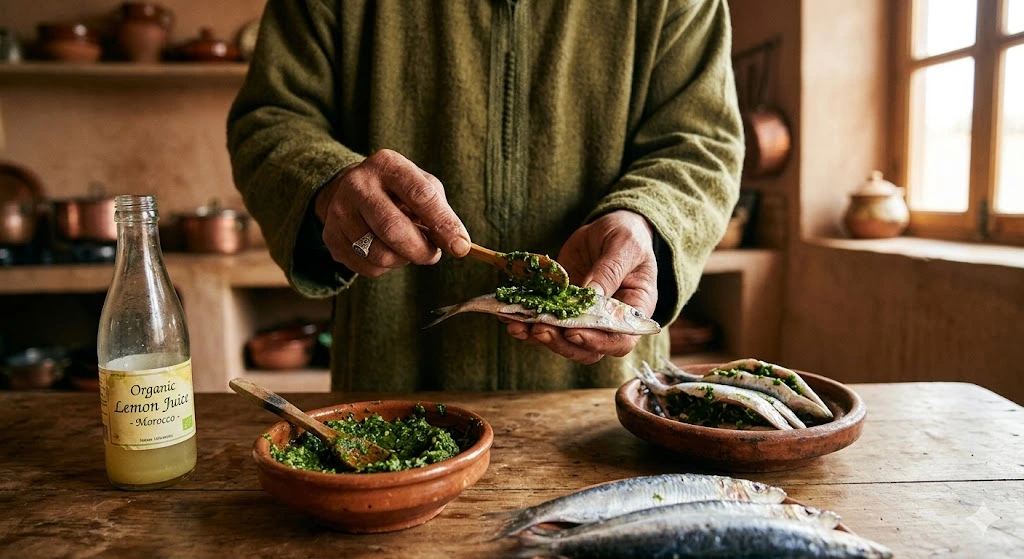
- The Stuffing: Next, lay one butterflied sardine flat, skin-side down. Spread a generous teaspoon of the Chermoula paste over the meat. Then, place a second butterflied sardine on top, skin-side up, pressing them gently together to form a “sandwich.” Repeat this process with all the fish.
- The Prep: Following this, preheat your oven to 200°C (400°F). Lightly oil a baking dish or a traditional clay tagine base.
- The Assembly: Now, arrange the sliced organic tomatoes and green bell pepper rings in a flat layer at the bottom of the dish. After that, place your stuffed Organic Moroccan Chermoula Sardines in a neat, overlapping row on top of the vegetables.
- The Bake: Meanwhile, if you have any leftover Chermoula paste, mix it with a splash of water and drizzle it over the top of the fish. Place the dish in the hot oven and bake for 15 to 20 minutes until the sardines are cooked through and slightly crispy on the edges.
- The Finish: Finally, remove the dish from the oven. Serve immediately while still sizzling, garnished with extra lemon wedges and a final drizzle of raw olive oil!
Chef’s Tip: Ask your local fishmonger to butterfly the sardines for you to save time! The fresher the fish, the sweeter the flavor of your Organic Moroccan Chermoula Sardines will be.
Conclusion: The Ultimate Bio-Healthy Seafood
In conclusion, mastering Organic Moroccan Chermoula Sardines allows you to bring a spectacular, nutrient-dense Mediterranean classic to your family’s table in under 30 minutes. To learn more about our commitment to sourcing pure, traditional ingredients, visit our About Us page. If you are ready to cook with our premium “Liquid Gold” olive oil or bio-spices, remember you can click the WhatsApp button on any of our product pages to order directly from me, or ask a question via our Contact Page.
Above all, stay healthy, cook with passion, and savor the authentic taste of the Moroccan coast!